Position Dynamics and Their Role in Shaping Outcomes for Sequential Betting Games on Regulated Platforms
Written by Mia Peters · Oct 30, 2026
Position Dynamics and Their Role in Shaping Outcomes for Sequential Betting Games on Regulated Platforms
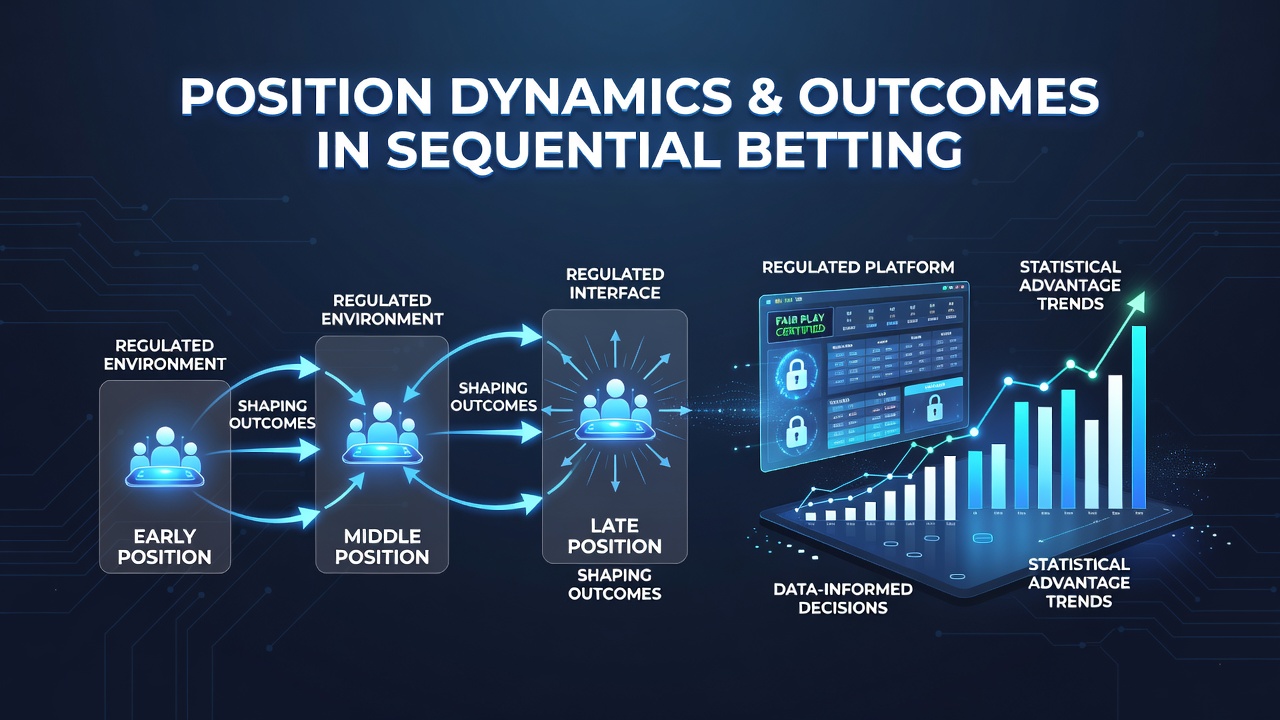
Position dynamics refer to the order in which players act during betting rounds in sequential games such as poker variants and certain table games offered on licensed platforms, and this order directly influences available information along with strategic options available to participants. In games where actions unfold one after another rather than simultaneously, those acting later gain access to prior decisions which alters probabilities of success across multiple hands or rounds.
Core Mechanics of Acting Order
Sequential betting structures place participants in fixed or rotating positions relative to a dealer or button marker, and early positions require commitments before others reveal intentions while late positions permit reactions based on observed bets, raises or folds. Data from platform analytics indicate that late position players achieve higher win rates in multi-round formats because they process more signals before committing chips, and studies tracking thousands of hands across European and North American sites confirm measurable edges tied strictly to order rather than card distribution alone.
Regulated environments enforce consistent shuffling and dealing protocols that isolate position effects from mechanical biases, which means outcomes trace more directly to decision timing than to any external factors. Observers note that platforms licensed in jurisdictions like Nevada or Australian states publish aggregated reports showing position-based performance gaps persist even after accounting for player skill distributions.
Information Asymmetry and Decision Trees
Acting later creates information asymmetry where each subsequent player incorporates knowledge of previous actions into their choices, and this compounds across betting streets in games like Texas Hold'em or Omaha. Researchers tracking session data from 2024 through October 2026 have documented that players in late seats fold marginal holdings more frequently than early actors because they wait for stronger confirmation signals, which reduces variance in bankroll swings over extended play periods.
Platform algorithms adjust seating rotations automatically under regulatory rules to distribute position advantages evenly across sessions, yet individual hand outcomes still reflect the momentary order at each table. One study from the University of Nevada Las Vegas examined over 2.3 million hands and found late-position aggression correlates with 12 to 18 percent higher expected value when controlling for starting hand strength.
Platform Implementation and Compliance Standards
Licensed operators integrate position tracking into their random number generators and game engines to maintain fairness audits, and regulatory bodies such as the Nevada Gaming Control Board require periodic reviews that verify position rotations do not favor house interests. In Canada the Alcohol and Gaming Commission of Ontario mandates similar transparency reports that break down performance metrics by seat position, allowing independent verification that no systematic bias exists beyond inherent game mathematics.
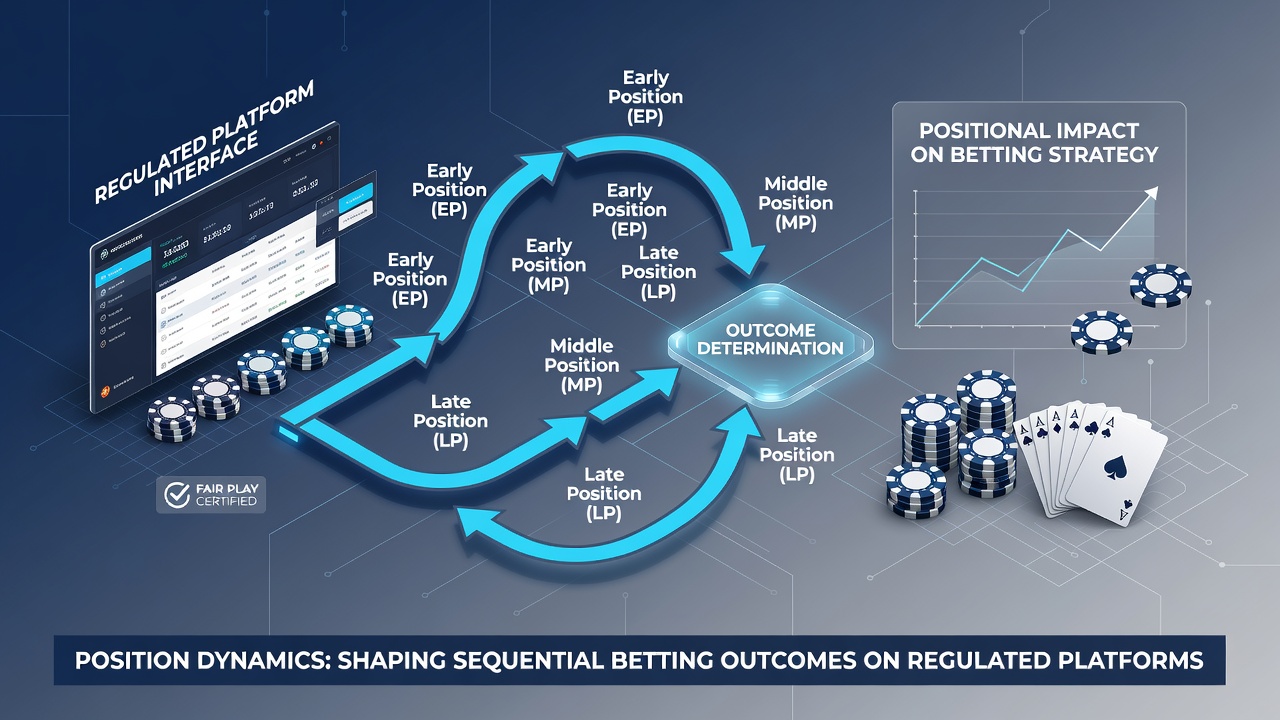
These requirements extend to mobile and desktop interfaces where visual indicators highlight current actor status, ensuring all participants understand their relative position before each decision. Figures released in October 2026 from several multi-jurisdictional operators show compliance rates above 99 percent for position rotation protocols across poker and sequential card rooms.
Empirical Patterns Across Game Types
Across no-limit hold'em cash games and tournament formats the advantage of late position manifests through wider starting ranges and more frequent continuation bets, while early positions demand tighter selections to offset informational disadvantages. Reports from the Australian Gambling Research Centre indicate that players who track their own position statistics over thousands of hands adjust ranges accordingly and record steadier long-term results than those who ignore order effects.
Sequential games on regulated platforms also incorporate time-bank mechanics that give later actors additional seconds for complex calculations, and this design choice further amplifies the value of position without violating any fairness statutes. Observers tracking session logs note that the combination of extra information and decision time produces measurable shifts in aggression metrics that appear consistently across different stake levels.
Conclusion
Position dynamics shape outcomes in sequential betting games by determining how much information each participant possesses before committing resources, and regulated platforms codify rotation rules to preserve competitive balance. Data gathered from multiple jurisdictions through October 2026 demonstrate that these dynamics remain central to game mathematics even after regulatory safeguards eliminate mechanical irregularities. Players who internalize order-based adjustments therefore operate within the structural realities defined by both game design and oversight frameworks.